

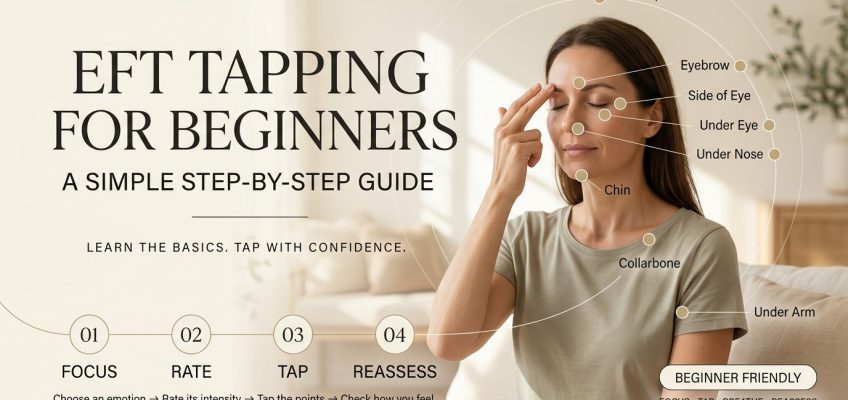
You don’t need any equipment, any training, or even much time to try EFT tapping for the first time — just a few quiet minutes and a willingness to say something a little unusual out loud. That’s part of what makes it such a popular entry point into self-help work: the barrier to trying it is almost zero. This guide walks through exactly how to do EFT tapping, step by step, including the tapping points, what to actually say, and a couple of ready-to-use scripts you can follow the first time you try it.
Table of Contents
- What Is EFT Tapping?
- What You Need Before Starting EFT Tapping
- How to Do EFT Tapping: Step-by-Step
- EFT Tapping Points: Where Should You Tap?
- What Should You Say While Tapping?
- Beginner EFT Tapping Script for Stress
- Beginner EFT Tapping Script for Anxiety
- How Long Should You Do EFT Tapping?
- Common EFT Tapping Mistakes Beginners Make
- What If EFT Tapping Doesn’t Feel Effective?
- EFT Tapping Safety and When to Seek Professional Support
- Frequently Asked Questions About EFT Tapping
What Is EFT Tapping?
Emotional Freedom Technique, or EFT tapping, is a self-help method that pairs physical tapping on specific acupressure points with spoken statements about a problem you’re working through. It blends elements of exposure and cognitive reframing — both borrowed from established therapies like Cognitive Behavioral Therapy — with acupressure, the same point system used in acupuncture. Developed by Gary Craig in the 1990s after he trained under Dr. Roger Callahan’s Thought Field Therapy (TFT), EFT simplified a more complex tapping system into one routine anyone could learn and use on themselves.
If you want the fuller background on where EFT came from and what the research says, that’s covered in our companion piece on what Emotional Freedom Technique is and how it works. This guide skips the theory and gets straight to practice: how to actually do it, starting today.
What You Need Before Starting EFT Tapping
One of the most beginner-friendly things about EFT is how little it requires to get started. Before your first round, gather just these four things:
- A quiet space. You don’t need silence exactly, but somewhere you won’t be interrupted or feel self-conscious saying things out loud.
- A specific issue to focus on. Not “my whole life is stressful,” but something narrower — a specific worry, a tight feeling in your chest, a memory that’s bothering you today.
- A 0–10 intensity rating in mind. This is your baseline. You’ll use it to track whether tapping is actually doing anything.
- A few minutes of uninterrupted time. A full round takes about a minute; most beginner sessions run five to ten minutes total.
How to Do EFT Tapping: Step-by-Step
Here’s the exact sequence to follow for your first session. It looks like a lot written out, but once you’ve done it once or twice, the whole thing takes less than a minute per round.
Step 1: Choose One Specific Issue
Pick a single, specific target — not a whole category of problems. “I’m nervous about my presentation tomorrow at 10am” works much better than “I’m stressed about work in general.” The more specific you get, the more the technique has to actually work with.
Step 2: Rate Its Intensity From 0–10
Close your eyes for a second, bring the issue to mind, and notice how strong it feels in your body right now. Zero means no distress at all; ten means it’s about as intense as you can imagine. This 0–10 scale is often called the Subjective Units of Distress Scale, a rating method also used in exposure-based therapies to track how distress shifts during treatment. Write the number down or just hold it in mind — you’ll compare against it later.
Step 3: Create Your Setup Statement
This is the sentence you’ll repeat while tapping the side of your hand. The standard format is: “Even though I [have this problem], I deeply and completely accept myself.” For example: “Even though I’m nervous about tomorrow’s presentation, I deeply and completely accept myself.” Say it like you mean it, even if the second half feels like a stretch at first.
Step 4: Tap the Karate Chop Point
The karate chop point is the fleshy outer edge of your hand, opposite your thumb — the part you’d use to karate-chop something. Tap this point continuously with two fingers of your other hand while you repeat your setup statement three times.
Step 5: Move Through the EFT Tapping Points
Now work through the rest of the tapping points in sequence (covered in detail in the next section), tapping each one about five to seven times with two fingertips.
Step 6: Use a Reminder Phrase
At each point, say a short reminder phrase to keep your attention on the issue — just a few words, like “this presentation nervousness” or “this tight feeling in my chest.” You’re not repeating the whole setup statement each time, just a condensed version to stay focused.
Step 7: Pause and Reassess
Once you’ve tapped through all the points, take a breath, and check back in with your original number. Has it dropped at all? Even a small shift, like from an 8 down to a 6, is a sign the technique is doing something.
Step 8: Repeat If Needed
If your number hasn’t dropped to a comfortable level, do another round. Often, the language shifts slightly as you go — you might notice the nervousness is really about fear of judgment, and your second-round setup statement can get more specific to that. Keep going until your number settles somewhere low, or until you feel a clear, noticeable shift.
EFT Tapping Points: Where Should You Tap?
There are nine points in the standard EFT sequence, all on the face and upper body. You tap gently with two fingertips — no need to press hard — moving through them in this order:
- Karate Chop (KC) — the outer edge of the hand, used for the setup statement
- Eyebrow — the inner edge, just above the bridge of the nose
- Side of Eye — on the bone at the outer corner of the eye
- Under Eye — on the bone directly beneath the pupil
- Under Nose — the small area between the nose and upper lip
- Chin — the crease between the lower lip and the chin
- Collarbone — just below where the collarbones meet, near the top of the sternum
- Under Arm — about four inches below the armpit, roughly level with the bra line or shirt pocket
- Top of Head — the crown, tapped with several fingers in a small circular pattern
You can tap on either side of the body — left or right — since the points are mirrored, and some people alternate sides without any issue. The order matters less than consistency; most beginners find it easiest to memorize the sequence by picturing it as a path moving down the face and body, from eyebrow to under-arm, finishing at the top of the head.
What Should You Say While Tapping?
This is the part beginners tend to overthink. You don’t need poetic language or a perfectly worded script — you need honesty about what’s actually happening for you right now. A few guidelines make this easier:
- Name the feeling plainly. “This anxiety,” “this knot in my stomach,” “this frustration with my sister” — simple, direct language works better than vague or overly polished phrasing.
- Pair it with acceptance, not judgment. The setup statement isn’t about agreeing the problem is fine — it’s about not adding self-criticism on top of the original feeling.
- Let the wording evolve. Your second or third round doesn’t need to use the exact same words as your first. If something shifts, follow it.
- It’s okay if it feels awkward. Saying “I deeply and completely accept myself” out loud can feel strange the first few times. That discomfort usually fades with practice.
Beginner EFT Tapping Script for Stress
Here’s a full script you can follow word-for-word the first time you try tapping for everyday stress — say, before a busy day or after a stressful conversation.
Setup statement (tap Karate Chop point, repeat 3 times):
“Even though I feel overwhelmed by everything on my plate today, I deeply and completely accept myself.”
Tapping sequence (reminder phrase at each point):
- Eyebrow: “This overwhelmed feeling.”
- Side of Eye: “So much on my plate.”
- Under Eye: “This tightness in my chest.”
- Under Nose: “I feel stretched too thin.”
- Chin: “This stress I’m carrying.”
- Collarbone: “So much to do.”
- Under Arm: “This overwhelmed feeling.”
- Top of Head: “I’m allowed to feel this.”
Pause, breathe, and check your number. If it’s still elevated, do a second round, adjusting the language toward whatever feels most true — maybe it’s less about the to-do list and more about not having enough time for yourself.
Beginner EFT Tapping Script for Anxiety
This script works well for situational anxiety — before a difficult conversation, a big decision, or a moment of nervous anticipation.
Setup statement (tap Karate Chop point, repeat 3 times):
“Even though I feel anxious about what’s coming, I deeply and completely accept myself.”
Tapping sequence (reminder phrase at each point):
- Eyebrow: “This anxious feeling.”
- Side of Eye: “This nervousness in my chest.”
- Under Eye: “Worried about what might happen.”
- Under Nose: “This uneasy feeling.”
- Chin: “My mind racing ahead.”
- Collarbone: “This anxiety.”
- Under Arm: “I don’t know how this will go.”
- Top of Head: “I can handle this, one step at a time.”
As with the stress script, reassess after one full round. Anxiety often has a specific fear underneath it — of judgment, of failure, of the unknown — and later rounds tend to get more effective once you name that underlying fear directly.
How Long Should You Do EFT Tapping?
A single round — one setup statement plus one pass through all nine points — takes about 45 seconds to a minute. Most beginner sessions run somewhere between five and ten minutes, covering two to four rounds on the same issue. There’s no strict rule here: some people notice a shift after a single round, while others need several rounds, sometimes across more than one sitting, especially for issues with more history behind them.
As a general guideline, keep tapping on the same issue as long as your distress number keeps moving in the right direction. If it plateaus after a couple of rounds and isn’t budging further, that’s usually a sign to either dig into a more specific angle of the issue, or to stop for the day and revisit it another time rather than forcing it.
Common EFT Tapping Mistakes Beginners Make
A few habits tend to blunt the effectiveness of tapping for people just starting out:
- Being too vague. “I’m stressed” gives the technique very little to work with compared to “I’m stressed about the email I need to send my boss today.”
- Trying to address multiple problems at once. Tapping works best on one specific target per round. Bundling several unrelated stresses together dilutes the focus.
- Skipping the intensity rating. Without a before-and-after number, it’s much harder to tell whether anything actually shifted, which makes it easy to give up prematurely.
- Rushing through the points. Tapping quickly through the sequence without pausing to actually feel into the reminder phrase reduces how much the exposure piece can do its job.
- Expecting an instant fix for complex problems. A single round can meaningfully lower stress about a specific moment, but deep-rooted patterns tied to years of history typically take repeated sessions, not one lucky round.
What If EFT Tapping Doesn’t Feel Effective?
It’s common for a first attempt to feel awkward or produce only a small shift — that doesn’t necessarily mean the technique isn’t for you. A few things worth trying before writing it off:
- Get more specific. If your first round targeted something broad, narrow it down further and try again.
- Check your language for judgment. Statements that subtly criticize yourself, even while trying to be accepting, can undercut the cognitive reframing piece.
- Give it more than one session. Some people notice more benefit on their third or fourth attempt than their first, simply from getting more comfortable with the format.
- Consider that it may not be the right fit. Like any self-help tool, EFT resonates more with some people than others. If it consistently doesn’t move the needle after honest, repeated attempts, that’s useful information, not a failure on your part.
EFT Tapping Safety and When to Seek Professional Support
EFT tapping is generally considered low-risk and has been used safely in numerous clinical studies, including with populations experiencing anxiety and post-traumatic stress. A systematic review of Clinical EFT research found the approach produced measurable symptom improvements across a range of conditions with a strong safety profile and low dropout rates compared to many standard treatments. That said, it’s worth being clear about its limits. EFT is a self-help tool, not a diagnostic or clinical treatment, and it isn’t a substitute for professional care when a professional is genuinely what’s needed.
If you’re working through diagnosed anxiety, depression, PTSD, or another mental health condition, EFT can be a useful complement to treatment, but it shouldn’t replace working with a licensed therapist or doctor. A meta-analysis on EFT and PTSD notes that while tapping shows meaningful effects for trauma-related symptoms, structured protocols with professional guidance tend to produce the most reliable outcomes for more severe trauma. Similarly, if tapping on a specific memory brings up intense distress, overwhelming flashbacks, or feelings that are hard to manage on your own, that’s a signal to pause and bring the work to a trained EFT practitioner or mental health professional rather than pushing through it alone. Tapping is designed to reduce distress gradually and safely — if a particular memory feels too big to approach solo, it’s reasonable to get support rather than go it alone.
Frequently Asked Questions About EFT Tapping
What is EFT tapping for beginners?
EFT tapping for beginners refers to the basic, self-guided version of Emotional Freedom Technique — using the standard tapping points and setup statement format to work through everyday stress, anxiety, or emotional triggers without needing formal training or a practitioner.
How do I start EFT tapping?
Start by picking one specific issue, rating its intensity from 0–10, creating a simple setup statement, and tapping through the nine standard points while repeating a short reminder phrase. Reassess your number afterward and repeat as needed.
How long should I tap?
Most beginner sessions run five to ten minutes, covering two to four rounds. Keep going as long as your distress number continues to drop; if it plateaus, it’s fine to pause and revisit the issue later.
How many times should I tap each point?
Around five to seven taps per point is standard, though there’s no strict rule — the goal is a light, steady rhythm while you stay focused on the reminder phrase, not a precise count.
What should I say during EFT tapping?
Use a setup statement that names the issue directly and pairs it with self-acceptance, such as “Even though I feel [X], I deeply and completely accept myself,” followed by short reminder phrases at each point that keep your attention on the feeling.
Can I do EFT tapping by myself?
Yes. The basic technique is designed to be self-administered, which is a big part of why it’s spread so widely as a self-help practice. For deeper trauma or diagnosed conditions, working with a trained practitioner is generally a safer starting point.
Can I practice EFT tapping every day?
Yes, daily practice is common and generally considered safe, whether you’re using it reactively for specific stressful moments or proactively as part of a regular emotional wellness routine.
Conclusion
EFT tapping rewards doing over reading about it — the fastest way to find out whether it works for you is to actually sit down, pick one specific issue, and run through a round using the steps above. Start small, stay specific, and pay attention to your own numbers rather than expecting a dramatic before-and-after. If this kind of body-based, belief-focused work resonates with you, it pairs naturally with other structured approaches to emotional and mindset change — you can explore that further with a free introductory training, or look into certification if you’re interested in eventually guiding others through this kind of work yourself.